AI Visual Pollution
AI-powered environmental monitoring that detects visual pollution from images automatically.
Keep your Site Clean and Safe.
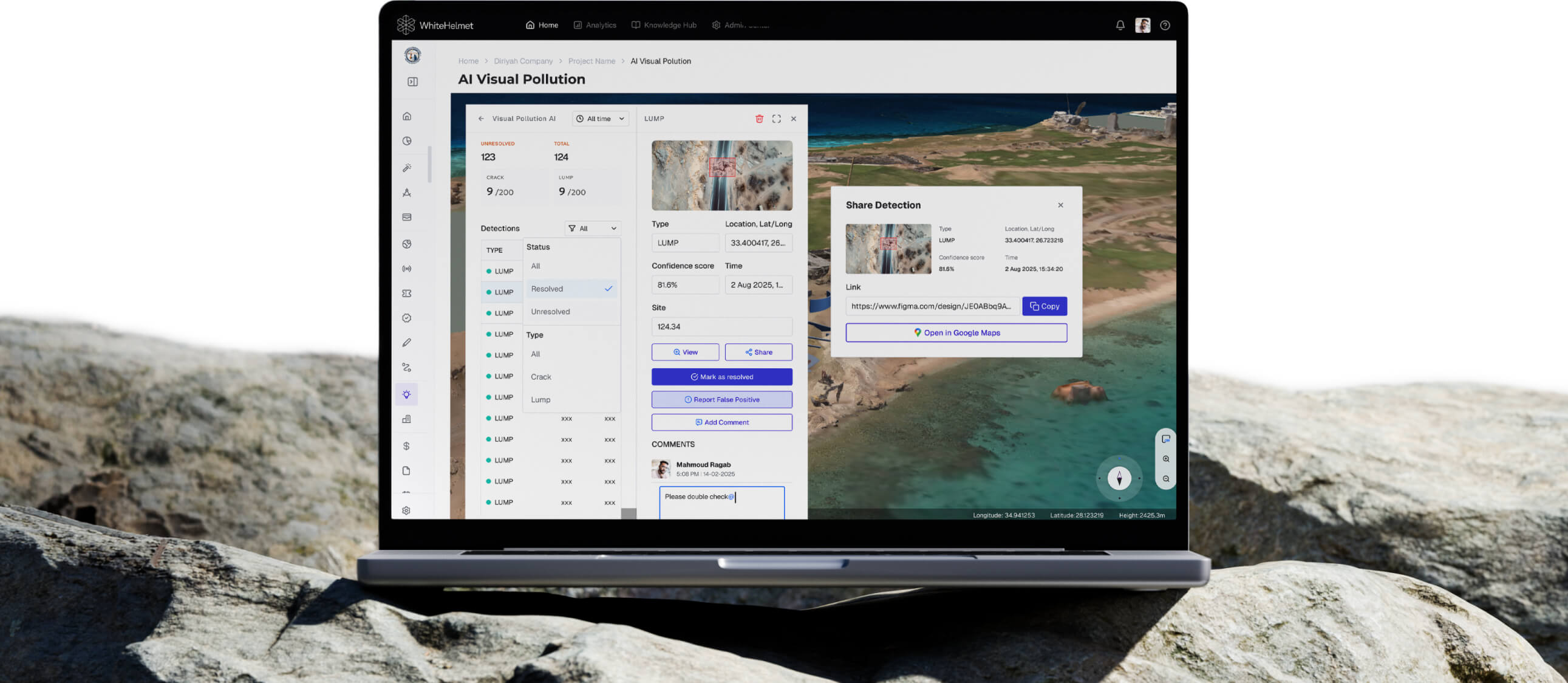
Upload drone images and let AI detect environmental pollution — waste accumulation, broken civil assets, stray animals, and construction waste. AI Visual Pollution frees manual site visit checks and allows you to optimize your resources based on real data, not randomized outsourcing.
AI Pollution Detection from Images
Multi-Category Violation Detection
Geo-Referenced Violation Mapping
Comment, Resolve, and Issue Detections
Trend Analytics & Dashboard
AI Detection Engine
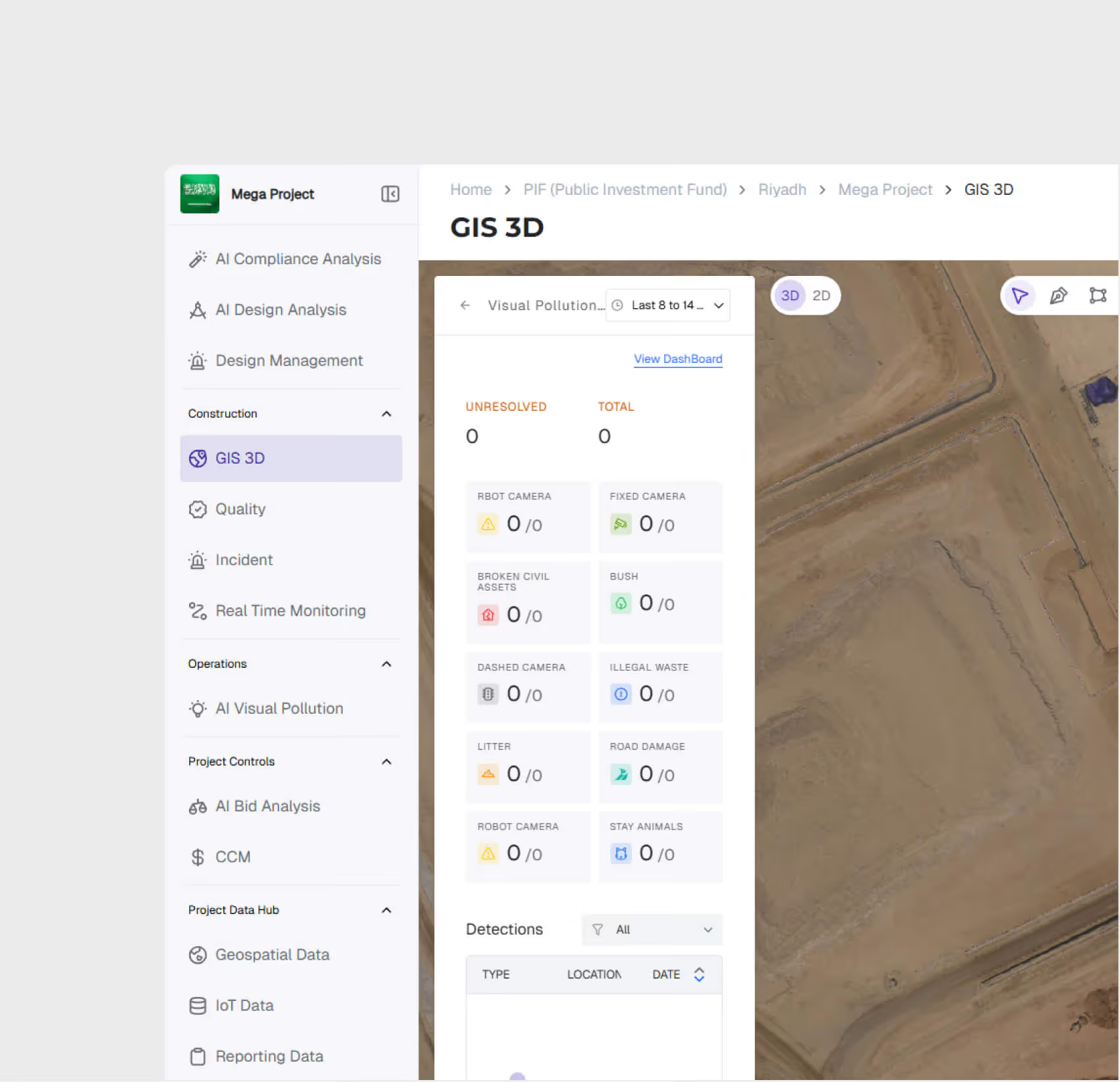
Upload drone images and the AI automatically identify pollution types — waste, broken civil assets, stray animals, and construction waste — with confidence scores and bounding boxes.
Multi-Category Detection
The system recognizes multiple pollution categories simultaneously, classifying each detection by type, severity, and geolocation.
.avif)
.avif)
Geo-Referenced Violation Mapping
Detections are mapped to their spatial location on the project GIS, enabling zone-level environmental monitoring and hotspot identification.
Compliance Trend Analytics
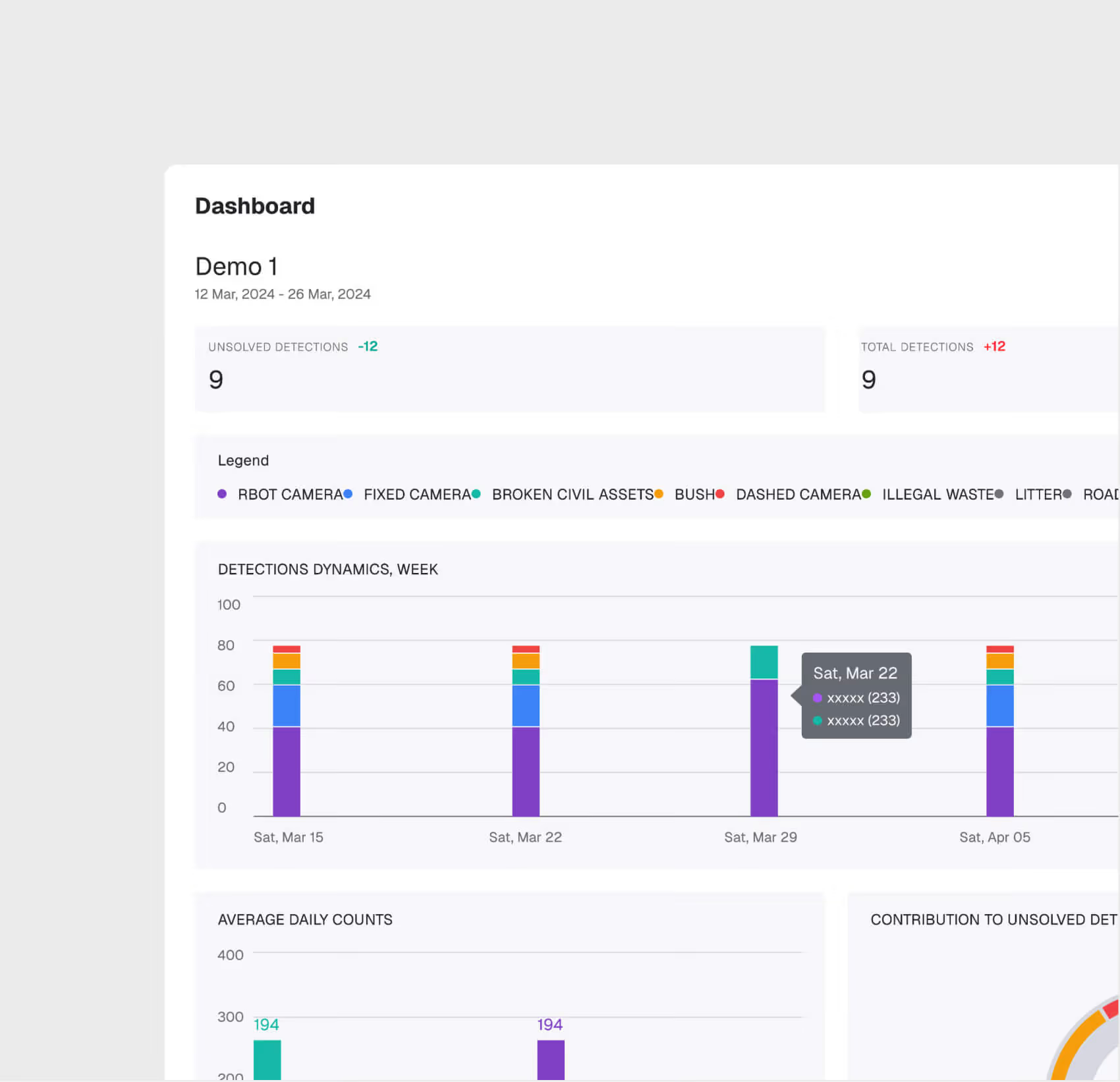
Track pollution detection trends over time — frequency, types, zones, and resolution rates — to demonstrate environmental due diligence to regulators.
AI Visual Pollution is most useful for:
Environmental Officers
Automated Compliance Monitoring
Replace manual environmental inspections with AI-powered image analysis that monitors site conditions continuously and flags violations before they escalate.
Municipality Supervisors
Proactive Site Management
Get early warning of environmental issues that could trigger regulatory stop-work orders, allowing corrective action before inspectors arrive.
HSE Directors
Portfolio Environmental Oversight
Monitor environmental compliance across all project sites from a single dashboard, with trend data for management reporting and regulatory submissions.
"We used to deploy 14 drivers across 30 locations for site visits and manual identification of visual pollution. Now we deploy 1 pilot across 30 locations and know exactly where to focus our efforts."
.avif)
Frequently asked questions
Work packages are color-coded on the map by status — planned, in-progress, and completed — with drill-down access to percentage completion and contractor assignments. They are connected to the reporting engine.
Yes. GIS 2D integrates directly with Primavera P6, displaying activity dates, completion percentages, and dependencies on the spatial map.
GIS 2D supports DWG, DXF, and KML file formats for CAD and geospatial overlays, with file sizes up to 100 MB for CAD and 50 MB for KML.
Workflows are easily configured with multiple review/approval stages, role-based routing, and SLA timers. Documents advance through stages based on approver actions.
The DMS supports all standard construction file formats including PDF, DWG, DXF, DOC, XLS, images, BIM files, and more.
Yes. Models from Revit and AutoCAD can be uploaded directly. The platform also supports IFC for open-standard interoperability.

